显示标签为“Singapore新加坡”的博文。显示所有博文

2019年12月20日星期五

传马国新隆高铁要减站点缩规模降成本

传马国新隆高铁要减站点缩规模降成本


消息指马来西亚政府明年5月宣布新隆高铁的最新情况时,预料将减少停靠站点及缩小站点建筑规模,以压低预计耗资上千亿令吉的成本。(档案照片)

马国《南洋商报》引述消息指马国政府为了降低成本,预料将减少新隆高铁站点和缩小站点建造规模,例如柔佛站点原本计划的大型商场将不会出现在首期计划内。消息没透露将舍弃马国七个站点中的哪个或哪些站点。

(吉隆坡综合讯)消息指马来西亚政府明年5月宣布新隆高铁的最新情况时,预料将减少停靠站点及缩小站点建筑规模,以压低预计耗资上千亿令吉的成本。

消息人士告诉《南洋商报》,马国政府计划采取上述两项措施以减低新隆高铁(HSR)成本。“例如柔佛依斯干达布蒂里站点面积将缩小。”

消息表示:“根据原本的蓝图,这个站点将建有购物商场。但根据新的‘缩小版计划’,当局将只着重兴建站点,原本计划的大型商场等其他设施将不会出现在第一期计划内。”消息说,另一项减低成本的措施是减少马国境内的七个站点。消息没透露将舍弃哪个或哪些站点。

据马来西亚高铁机构早前的宣布,马国境内的原有的七个站点包括吉隆坡马来西亚城、布城、芙蓉、马六甲,以及柔佛的麻坡、峇株巴辖和依斯干达布蒂里,然后延伸到新加坡裕廊东的高铁终站。

峇株巴辖站最可能被舍弃

据了解,上述七个站点之中,吉隆坡站与布城站最不可能舍弃,芙蓉站与马六甲站又是森美兰及马六甲唯一高铁站点,舍弃的可能性也不高。

至于柔佛境内的三个站点,依斯干达布蒂里站点直接连接新加坡,因此较不可能舍弃,麻坡则是内政部长、希盟署理主席与土著团结党主席慕尤丁的选区所在,慕尤丁多年来都视高铁站点为其政绩之一。因此相比之下,最有可能割爱的可能是峇株巴辖站。

消息人士也透露,马方也将征地赔偿金和站点设计费,列为可以降低成本的关键领域。

关于新隆高铁的成本,纳吉政府指其成本约550亿令吉(约184亿新元)。但经济事务部长阿兹敏7月18日在国会下议院答询时表示,新隆高铁实际成本高达1100亿令吉(约359亿新元)。

新加坡与马来西亚在2016年12月签署“新隆高铁双边协定”,打造全长350公里、新加坡直通吉隆坡的高铁服务。此计划原定2018年动工、2026年底投入运作,但希盟赢得去年5月大选上台后,再次出任首相的马哈迪先以减少国家债务为由,要取消新隆高铁计划,过后则要求展延工程。

两国经过几轮谈判,终于在去年9月签署协定,同意把高铁工程展延约两年。马来西亚为此必须赔偿新加坡1500万新元的延期费用。

双方虽同意延迟新隆高铁项目开工日期,但开工日期不能晚于明年5月31日,也就是希盟政府成立超过两年之后,否则马方就视同毁约而必须额外赔偿新方超过6600万新元。

新加坡交通部:至今未收到马国任何正式企划书

新加坡交通部发言人受询时指出,新加坡至今尚未收到马来西亚有关新隆高铁项目的任何正式企划书。

~早报网~

2019年11月29日星期五

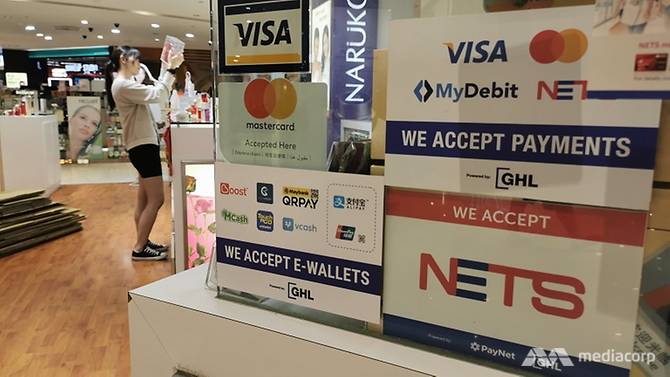
NETS payment now available in KL, Melaka and Penang

NETS payment now available in KL, Melaka and Penang


Singaporean shoppers headed to Kuala Lumpur, Penang and Melaka will now be able to make purchases with their NETS ATM card.

The number of NETS acceptance points across Malaysia have increased from 4,500 to 7,400 points, and they can now be found in the three major cities in addition to Johor Bahru, said NETS and its Malaysian counterpart Payment Network Malaysia (PayNet) on Friday (Nov 29).

The service has expanded since it was first introduced in November 2018, when NETS said that Singapore consumers could use their NETS ATM cards in Johor Bahru malls like JB City Square, Sutera Mall and KSL City Mall.

Now, Singapore bank card holders who shop at KLIA 2 and Sunway Pyramid in Kuala Lumpur, Queensbay Mall in Penang as well as Makhota Parade and Dataran Pahlawan in Melaka will be able to pay with NETS.

The services will be available at multiple outlets, including retailers that are popular among Singaporeans such as Giant Hypermarket, pharmacy Guardian, medicinal store Eu Yan Sang and bak kwa chain Bee Cheng Hiang.

Malaysian travellers to Singapore may now also make purchases using MyDebit ATM cards, Malaysia’s national debit card scheme through 500 acceptance points.

MyDebit may be used through NETS' network of merchants at Bugis Village, as well as outlets like Apple retailer iStudio, Pandora, Awfully Chocolate and Salad Stop!.

The initiative was first announced in a joint statement in April by Malaysian Prime Minister Mahathir Mohamad and his Singapore counterpart Lee Hsien Loong.

EXCHANGE RATE "ALMOST THE SAME AS" MONEY CHANGERS

In an interview with CNA, Group CEO of NETS Jeffrey Goh highlighted that exchange rates will be competitive for Singaporean visitors who can now use NETS ATM cards instead of bringing wads of cash when they shop in Malaysia. 

“So for example, when Singaporeans go to the grocer, and you don’t have enough cash, (this NETS service) gives them an option. It also gives them peace of mind knowing that we don’t charge them high forex rates,” said Mr Goh.

While the exchange rate could vary with every purchase, Mr Goh said that it was "almost the same as the money changers".

“For merchants, NETS service will bring customers to them. And customers (might) make bigger orders too as it's convenient for them,” he said.

When CNA visited an optician retailer at JB City Square, a Singaporean shopper who bought contact lenses with his NETS ATM card was charged with a conversion rate of S$1 to RM3.0248.

The rate was similar to the selling rate of S$1 to RM3.03 offered at a money changer at the same mall.

Singaporean Muhd Ismail Hassan, who visited JB City Square for a day trip, told CNA that expanding the use of NETS ATM card services to Kuala Lumpur, Melaka and Penang was a good idea.

“When we travel up, we don’t have to carry S$1,000 to S$2,000 of cash anymore. It’s more convenient for us when we shop at the malls in these places,” he said.

Mr Goh said that NETS is looking to increase the number of acceptance points to restaurants and shopping outlets in Malaysia that are popular among Singaporeans. He added that NETS is working with PayNet to offer QR code payments “within the next six months” for customers.

This means that Singaporean visitors to Malaysia, or Malaysian visitors to Singapore, will be able to make purchases via cashless payments services such as DBS PayLah via QR code transactions through their smartphones. 

NETS was also working with partners in Indonesia and Thailand to enable cross-border instant fund transfers and QR payments in the future, he said.

Source: CNA/am(hm)

2019年4月17日星期三

Dr M: No need for high-speed rail in M'sia, yet

Dr M: No need for high-speed rail in M'sia, yet [NSTTV]

Malaysia does not yet need a high-speed train service, said Prime Minister Tun Dr Mahathir Mohamad today.

“At the moment, a high-speed train (service) is not really necessary for Malaysia, especially as it is only within Singapore and Kuala Lumpur.

“Later on, we might need a high-speed train from Johor Baru to Penang or even to the Thai border. So, we will not build the high-speed train yet,” he told reporters after launching local rail engineering innovation exhibition and technology showcase, or TECHNOMART.

Instead, Dr Mahathir said, the government was more keen on improving the existing railway services.

“We want to improve the quality of service given by our railway system, and that has been done to some extent, by double tracking and electrification.”

The prime minister, however, said Malaysia would go back to the discussion table with Singapore within two years to discuss the High-Speed Rail project.

“We have spoken to Singapore. For the time being, we are not going to build (the high-speed rail). We (have) asked for two years before we begin talks again.

“(For) the HSR at the moment, we are not giving out any contracts but we have had to compensate to Singapore earlier.”

Dr Mahathir was also asked whether Singapore would be agreeable to the idea of the HSR being connected to the Thai border.

“No, I don’t think they will consider. We only think about Kuala Lumpur.”

On the possibility of having an HSR alignment from Johor Baru to Penang, the prime minister said eventually, Malaysia would need such an alignment.

“When the time comes. We are not yet in need of such an alignment. Eventually, we will need it.”

On Sept 5, 2018, Singapore agreed to suspend the construction of the project until the end of May 2020.

As a result of Malaysia’s request for the deferment, it agreed to pay an abortive cost of S$15 million (RM45.6 million) to Singapore by Jan 31 of this year.

Dr Mahathir also said Malaysians had begun to appreciate using the railway system, which had improved over time.

He said some Malaysians would rather use the existing railway services than driving and facing traffic jams.

~News courtesy of New Straits Times~

2019年4月15日星期一

Firefly to resume Singapore flights with twice-daily trips

Malaysian carrier Firefly to resume Singapore flights with twice-daily trips


Malaysian budget carrier Firefly said on Friday (Apr 12) that it will resume flights to Singapore with two trips a day.

The move comes after Malaysia suspended its permanent Restricted Area over Pasir Gudang indefinitely, while Singapore withdrew the Instrument Landing System procedures at Seletar Airport, paving the way for Firefly to resume operations.

Firefly will offer two flights a day between Subang and Seletar Airports from April 22 to 28, followed thereafter by six daily flights, it said.

"The schedule takes into account stringent safety measures that are in compliance with the technical requirements established by the Civil Aviation Authority of Malaysia," it said.

Chief executive officer Philip See said the flights will play a significant role in strengthening economic and social ties between Singapore and Malaysia.


"It's important for business, for connecting family and friends, and for tourism, to have our Singapore flights reinstated," he said.

"The new schedule, along with other service enhancements, will be progressively rolled out over the coming months."

Going forward, the 12-year-old airline aims to resume a full schedule once the necessary technical and regulatory approvals are secured.

Tickets are available for purchase from Friday via website www.fireflyz.com.my, the mobile app or the call centre at 03-7845 4543.

Firefly suspended its flights to Singapore in December last year, after it was unable to obtain approval from Malaysia’s aviation regulator to move its operations from Changi Airport to Seletar Airport.

Before the suspension, Firefly offered 20 daily flights between Singapore and Subang, Ipoh and Kuantan.

Source: Bernama/CNA/aj(mi)

2018年9月6日星期四

新隆高铁项目延后两年

马国支付1500万元延期费用 新隆高铁项目延后两年


我国基础建设统筹部长兼交通部长许文远(前排左)和马来西亚经济事务部长阿兹敏(前排右)签署协议,将新隆高铁计划延后两年。多名新马领导人也在场见证签署仪式,他们包括通讯及新闻部兼文化、社区及青年部高级政务部长沈颖(后排左起)、外交部长维文医生、副总理兼国家安全统筹部长张志贤、马国首相马哈迪、副首相旺阿兹莎、马国外交部长赛富丁和交通部长陆兆福。(梁伟康摄)

马来西亚若在2020年5月底的最后期限内仍不重新启动高铁工程,将被视为毁约终止计划,必须偿还新加坡至今所蒙受的损失。

新加坡和马来西亚签署协议暂停新隆高铁项目,马来西亚为此必须支付1500万新元的延期费用。若在2020年5月底的最后期限内仍不重新启动高铁工程,马来西亚将被视为毁约终止计划,必须偿还新加坡至今所蒙受的损失。

基础建设统筹部长兼交通部长许文远昨天在马国布城首相署同马来西亚经济事务部长阿兹敏签署高铁双边协定的补充条款,同意将高铁工程延至两年后进行。这意味着原定明年动工挖掘、2026年底投入运作的新隆高铁会延至最迟2031年1月1日才能启用 。

两国分别设立的高铁公司也取消了进行中的高铁资产管理者(AssetsCo)国际招标。此前表示有意竞标新隆高铁的包括中国、日本和欧洲等铁路财团。

基础建设统筹部长兼交通部长许文远指出,新加坡为履行双边协定兴建高铁服务至今已展开部分工程,有的承包商合约有终止条款,有的如重新铺设电缆和水管等服务一旦开始就必须做完。这些是暂停高铁计划无法回收的成本,双方仔细研究各项花费后,定下了1500万元的延期费用。按协议,马来西亚必须在明年1月底之前支付这笔费用。

两国2016年12月签署新隆高铁双边协定,打造新加坡直通吉隆坡的高铁服务。希盟政府今年5月上台后,以减少国家债务为由先是表示取消新隆高铁计划,后来则要求延后工程。

延至2031年1月通车

阿兹敏昨天在联合记者会上透露,马方原本要求推迟至三四年后,新加坡则表示愿意考虑延后一年,双方官员在过去数周频密往返两地磋商,最终达成协议,延展两年。

对此许文远指出,项目动工每延后一年,启用时间就会推迟数年。

他说:“高铁计划推迟两年至2020年,启用日期则得延迟四年到2031年1月。我们当初研究这项计划的可行性时,成本是考虑因素之一,计划成本多高、收益如何、是否行得通,这些都必须进行财务预估,计划延后得越久,预估就会变得越不准确,从新加坡角度来看,延期必须有个限度。”

许文远说,若2020年5月期限后确定终止新隆高铁,马国必须偿还更高数额的赔偿金。他指出,这方面的赔偿也是双方研究新加坡各方面成本后定下,但两国并不愿公开这笔赔偿金额。

许文远较早前在国会表示,截至今年6月底,我国已为高铁项目投入至少2亿5600万新元,其中包括征用裕廊乡村俱乐部等地段兴建高铁。

联合声明指出,马来西亚和新加坡在计划暂停期间将“以削减成本为目标”,继续探讨高铁计划下来的最佳发展方案。

在记者会上,许文远也说,新加坡与吉隆坡相隔近400公里,在交通专家眼中是适合兴建高铁服务的距离,许多国人也期待新隆高铁的启用。“但我们也理解马来西亚要暂停兴建高铁的原因,因此尽管高铁双边协定没有关于暂停计划的条款,但秉持双边合作的精神,新加坡认真考虑了马来西亚的请求,经过几轮讨论后达成了这个公平的安排。”

~联合早报~

2018年9月3日星期一

Agreed to defer HSR project

Malaysia, Singapore have agreed to defer HSR project, confirms Azmin

Singapore has accepted Malaysia’s view on deferring the Kuala Lumpur-Singapore High Speed Rail mega project, says Economic Affairs Minister Datuk Seri Mohamed Azmin Ali.

Azmin said the outcome was agreed upon in a meeting with Singapore Prime Minister Lee Hsien Loong. Both countries, said Azmin, agreed to defer the project.

“The HSR project benefits both countries, enabling better connectivity and could generate long-term economic growth. However, given the current economic situation (of Malaysia), it is impossible for us to continue with the project and after a series of discussions, Singapore has agreed to accept the Malaysian government’s view to defer the project to a certain period. We are confident that by then, Malaysia’s economy will improve.

“Lee was happy that both countries had agreed to defer the project and there is no compensation needed to pay during this deferral period. It must be paid if at the end of the deferral period, we (Malaysia) decide to cancel the project,” said Azmin.

Azmin said this when met at the sidelines after the opening of the second meeting of the first term of the14th Selangor state legislative assembly by Sultan of Selangor, Sultan Sharafuddin Idris Shah.

The event was also graced by Tengku Permaisuri Selangor Tengku Permaisuri Norashikin and Raja Muda Selangor Tengku Amir Shah.

Azmin, who is also Bukit Antarabangsa state assemblyman, however, stopped short of elaborating on how long the deferral would be.

He assured that “a reasonable period” had been agreed upon by both parties and that an agreement would be sealed in Kuala Lumpur in the near future.

Though deferred, Azmin added that discussions will continue to see how the cost of the project can be reduced through the use of new technology or other aspects.

He said Malaysia wants to continue with the project once the deferral period ends as the services will be economically beneficial to both countries and its people.

“We want to discuss ways to lower the cost and one of the steps we will focus on is the international service first. There are two components to the HSR, one is the international service route from Singapore to Kuala Lumpur and another is domestic service, which has seven stations along the way.

“We will focus on international service only as it gives a good economic impact to both Malaysia and Singapore,” said Azmin.

Business weekly The Edge had prevously reported that Malaysia and Singapore had reached a compromise over the implementation of the HSR.

The deferral, claimed the report, will be in effect until May 31, 2020.

The report also said Malaysia would be spared a RM500 million penalty the two-year deferral.

According to the report, the original agreement to build the HSR, signed in 2016, did not contain provisions for a postponement.

Pakatan Harapan, after taking over the government after the May 9 general election, had said the project could cost up to RM110 billion.

~News courtesy of New Straits Times~

2018年8月30日星期四

S'pore, M'sia to announce joint decisions on HSR and RTS soon

Singapore, Malaysia to announce joint decisions on HSR and RTS soon: Khaw

Singapore and Malaysia will announce their joint decisions on the Johor Bahru-Singapore Rapid Transit System (RTS) link and Kuala Lumpur-Singapore High-Speed Rail (HSR) projects soon, said Coordinating Minister for Infrastructure and Transport Minister Khaw Boon Wan on Thursday (Aug 30).

In a Facebook post recapping a meeting with Malaysia's Economic Affairs Minister Mohamed Azmin Ali, Mr Khaw said the two were "brainstorming ideas on how to further our bilateral relationship".

"There is so much we can do together, for mutual benefits. He is an inspiring leader," Mr Khaw said.

"We should be able to announce our joint decisions on RTS and HSR soon," Mr Khaw added.

Mr Azmin also posted a tweet on Thursday morning, saying: "We are inching closer to a win-win deal on HSR, thanks to the hard work of officials from both sides."

The HSR and RTS agreements were among several entered into by the Najib Razak-led government that were revisited following the opposition Pakatan Harapan's historic victory in the Malaysian general election.

In May, opposition leader and newly appointed Prime Minister Mahathir Mohamad announced that the country would drop the HSR project, saying it would cost "a huge sum of money" and was not beneficial to Malaysia.

Malaysia's Transport Minister Anthony Loke, however, has said the government remains committed to the RTS, though it still needs to study the costs of the project.

In July, Dr Mahathir said his government would look to negotiate a deferment of the HSR instead.

"Having studied it and the implication of unilaterally discarding the contract, we decided we may have to do it at a later date, we may have to reduce the price. But reduction of the price is very difficult as far as we can make out. So it has to be deferred," he said.

Mr Azmin had said then that he planned to visit Singapore in the near future to discuss the status of the HSR agreement.

Dr Mahathir, who also announced in August that he was dropping the Chinese-backed East Coast Rail Link pipeline projects, as well as a natural gas pipeline project in Sabah, said after his appointment that Malaysia's debt topped RM1 trillion (S$331 billion).

He told the Financial Times in an interview that the cancellation of the HSR was necessary to "avoid being declared bankrupt".

~News courtesy of Channel News Asia~

2018年8月15日星期三

Malaysia seeks KL-S‘pore HSR delay pending review

Malaysia seeks KL-S‘pore HSR delay pending review


A file picture of a KL-Singapore HSR station concept design.

SINGAPORE (The Straits Times/Asia News Network): Months after the Malaysia signalled that it was rethinking the Kuala Lumpur-Singapore High Speed Rail (HSR) link, Malaysian Economic Affairs Minister Datuk Seri Mohamed Azmin Ali, who is in charge of the project held an official meeting with his Singapore counterpart last Saturday.

Azmin told The Straits Times that his meeting with Singapore's Coordinating Minister for Infrastructure and Transport Minister Khaw Boon Wan in the Republic was "official... good and productive".

"I explained Malaysia's position on the project. The Minister for Infrastructure will have to bring it to Singapore's Cabinet," Azmin said.

A spokesman for Singapore's Ministry of Transport confirmed the meeting was held. "The ministers discussed the HSR project and agreed to continue discussions in the coming weeks," she said.

Tun Dr Mahathir Mohamad's administration had initially expressed its desire to scrap the HSR project due to cost concerns after claiming that it had inherited more than RM1 trillion in debt from the previous Barisan Nasional government.

However, it later softened its stance, saying it would first have to negotiate with Singapore as there were penalties for cancelling the deal inked in December 2016.

Kuala Lumpur most recently said it would seek a deferment of the project it estimates will cost RM110bil and was originally slated to be completed in 2026.

But it had yet to convey this request formally to Singapore.

Khaw said last month that Singapore has spent more than S$250mil (RM743mil) on the project, and is likely to pour in another S$40mil (RM118mil) by the year end.

It had written officially to Malaysia in a diplomatic note on June 1 asking for clarity and a meeting to be held by July 31.

Azmin, charged with handling negotiations for Malaysia, had said he would try to meet the deadline but was busy with duties at the ongoing Parliament sitting.

In a letter to the Singapore government dated July 23, Azmin stated that the Malaysia was studying the details of the HSR project and will commence discussions with the Republic soon.

Singapore had welcomed Malaysia's suggestion to commence discussions on the project that will shorten travelling time between Kuala Lumpur and Singapore to only 90 minutes.

On Aug 6, Azmin said he had met "senior officials" in Singapore the previous weekend when he visited Malaysian Home Minister Muhyiddin Yassin, who was then hospitalised in the Republic. He said that "the official meeting will take place some time in August".

However, Singapore's Ministry of Transport said on Aug 7 that no meeting had taken place or had been scheduled between Azmin and Singapore officials overseeing the HSR. – The Straits Times/Asia News Network

2018年5月6日星期日

Singapore-KL route is world's busiest global air link

Singapore-KL route is world's busiest global air link

The Singapore-Kuala Lumpur route is the world's busiest international air link, with seven airlines that operate up to 84 flights a day.

In second place is Hong Kong-Taipei, followed by Singapore-Jakarta.

The ranking by industry consultancy OAG, released on Thursday, is based on the number of flights between two cities in the 12 months to the end of February this year.

The Singapore-KL connection topped OAG's busiest international routes ranking with 30,537 flights, compared with 28,887 flights for Hong Kong-Taipei and 27,304 flights for Singapore-Jakarta.

While the Singapore-KL sector was the busiest for Changi Airport based on the number of flights operated, more people flew between Singapore and Jakarta during the same 12 months.

Total passenger traffic on the route was more than 4.6 million, compared with about four million for Singapore-KL.

Mr Mayur Patel, OAG's regional sales director for Japan and the Asia-Pacific, noted that 14 of the world's 20 busiest routes, including eight of the top 10, are between Asian cities.

"Given the robust expansion of air passenger travel across the Asia-Pacific and the fierce competition between carriers in the region, it is unsurprising," he said on Thursday.

Turning to airports, OAG noted that Hong Kong was the busiest Asian airport hub, featuring in six of the top 20 routes while Changi Airport featured in four. Mr Patel said: "While this intense level of competition offers impressive flight frequencies and competitive prices for consumers, it adds pressure to the operating costs and on-time performance of carriers, and may prove unsustainable over time."

Other industry experts noted that the expansion of low-cost carriers in Asia has significantly boosted the number of air services between Asian cities, including Singapore-Kuala Lumpur and Singapore-Jakarta.

Number of passengers flying the Singapore-KL route in the 12 months to end-February this year.

Mr Brendan Sobie from the Centre for Aviation noted in a recent report that low-cost carriers in Singapore now operate a fleet of 60 aircraft - 44 from the Airbus 320 family and 16 Boeing 787s.

In 2012, they had just 37 planes in total.

Low-cost carriers currently account for about a third of the total passenger traffic at Changi Airport.

There are now 18 such airlines offering both short-and long-haul flights to and from Singapore, said Mr Sobie.

~Courtesy of Straits Times~

2017年8月28日星期一

Japan courts Singapore in bid for High-Speed Rail project to KL

Japan courts Singapore in bid for High-Speed Rail project to KL

Japan is pulling out the stops in making a pitch to Singapore for the proposed High-Speed Rail (HSR) project to Kuala Lumpur.

The country’s Minister for Land, Infrastructure, Transport and Tourism, Mr Keiichi Ishii, hosted a symposium in the Republic on Monday (Aug 28) to tout its wares for the project, with Singapore’s Transport Minister Khaw Boon Wan in attendance.

Japanese public sector officials and companies cited the safety, reliability and sustainability of its Shinkansen High Speed Rail system as selling points for the Singapore-Malaysia joint project.

Since the Shinkansen opened in 1964, the system has experienced zero fatalities in its decades of operations and the average annual delay per train is under a minute, they said.

Potential ideas for collaboration between the two countries were thrown up, including for the Shinkansen system to be manufactured in Singapore and for the two countries to develop design and implementation policies for the HSR together. The latter includes working out how space in the project’s Singapore terminus is utilised and enhancing transportation links around the station.

Japanese representatives said its Shinkansen system will be able to complement the network of trains, buses, taxis and even shared bicycles currently in the Republic.

At the symposium, Singapore’s Land Transport Authority said it will hold a second industry briefing on the HSR in London in September.

It also said plans to call a tender for the building and maintenance of the project’s rolling stock and rail assets by the end of this year are on track.

A similar symposium was held by Japan in Kuala Lumpur in May this year.

~News courtesy of Channel News Asia~

2016年11月30日星期三

S'pore, M'sia made very good progress on high-speed rail agreement

Singapore, Malaysia have made very good progress on high-speed rail agreement: PM Lee


PM Lee in an interview with the chairman of Malaysian state news agency Bernama Azman Ujang on Monday (Nov 28).

Prime Minister Lee Hsien Loong says Singapore and Malaysia have made very good progress on a bilateral agreement on the Singapore-Kuala Lumpur High-Speed Rail (HSR), and hopes both sides can sign the agreement when he and Prime Minister Najib Razak meet at the Leaders' Retreat. 

"It is a very ambitious, very complicated and a very expansive project, in terms of scale. We have to try our best to anticipate what the likely issues are, when we build it, when we operate it, and have a clear understanding on how we will deal with it if a situation arises," Mr Lee said in an interview with the chairman of Malaysian state news agency Bernama Azman Ujang on Monday(Nov 28).

"The first thing is to have a sound agreement between the two countries on the basis of how the project is structured, how it is going to be executed, and how it is backed by the two governments," said Mr Lee in the interview, the transcript of which was released by the Prime Minister's Office today (Nov 30).

"That is the first requirement, that we have a very good agreement which sets out clearly a sound basis to build and operate the system."

Singapore, KL 'working towards' inking High Speed Rail pact on Dec 5

Both countries have been discussing the agreement for more than a year, Mr Lee noted.

"We are almost there, and I hope that when I meet Prime Minister Najib at the next retreat, we will be able to sign the agreement," he said.

On Tuesday (Nov 29), Malaysian Minister in the Prime Minister's Department Abdul Rahman Dahlan met Coordinating Minister for Infrastructure and Transport Minister Khaw Boon Wan, and Mr Abdul Rahman said on Instagram they met "to harmonise last minute details of the Bilateral Agreement on Malaysia-Singapore High Speed Rail project before signing ceremony in December".

A memorandum of understanding for the HSR project was signed in July this year by Mr Khaw and Mr Abdul Rahman, and it was witnessed by the two prime ministers.

Construction for the project is expected to begin in 2018, with trains running in 2026.

Secondly, Mr Lee noted that the project's execution will be very important - designing it, calling for tenders, evaluating the proposals.

"Several high-speed rail systems in the world have been lobbying very hard to get this contract - the Japanese, the Koreans, the Chinese high-speed rail," he noted.

"Each has its strengths, and we will have a very difficult decision evaluating the bidders who come along and deciding which one is the best overall."

Asked about the cost-sharing of construction, PM Lee said things like that had to be clearly specified, and it was one of the items that made the project complicated.

"When you have two authorities involved, you have to decide how to partition, where the line is drawn. I build my part, you build your part, and we have to meet at the same point," he said. "If it does not meet then we have a big problem."

PM Lee added: "It is complicated but there is a will. And there is a good will, and we would like to make it succeed."

He was also asked if a third bridge between Singapore and Malaysia - which some in Malaysia had suggested recently - is necessary with the HSR project.

Mr Lee said there are currently no plans for it.

"We are not currently planning for a third bridge," he said. "I have seen some statements in Malaysia suggesting one, but the high-speed rail is a very ambitious project. I would focus all my energies doing that one before we launch a new big project."

~News courtesy of Straits Times~

2016年11月15日星期二

新马料下月签署新隆高铁双边协议

新马料下月签署新隆高铁双边协议


2016年7月19日,李显龙总理(左二)到马来西亚行政首都布城进行访问,与马国首相纳吉(右二)一同在其官邸见证两国代表签署新隆高铁谅解备忘录。左一为新加坡代表、基础建设统筹部长兼交通部长许文远。(档案照)

李显龙总理下月5日将同马来西亚首相纳吉举行非正式峰会,两国届时料将签署新隆高速铁路双边协议。

马来西亚媒体今天报道两国将签署新隆高铁双边协议的消息,我国交通部发言人接受《联合早报》询问时证实:“新加坡和马来西亚正努力朝在12月5日举行的领导人非正式峰会上,签署新隆高铁双边协议。”

交通部没有进一步提供详情。不过马来西亚英文报章《新海峡时报》引述知情人士报道,此次非正式峰会将在柔佛举行,李总理和纳吉将见证两国官员签署新隆高铁双边协议;协议目前尚在草拟阶段,但内容料涵盖详细的成本与收益分配。

两国官员今年七月在李总理访问马来西亚之际,签署新隆高铁谅解备忘录,就高铁项目的技术、融资、运作和监管框架等细节达成共识。下月若达成具法律约束力的双边协议,这将意味着两国可进一步详细规划落实这个衔接新加坡和吉隆坡的大型高铁工程。

全长约350公里的新隆高铁共设八个站,两端终站分别设在新加坡的裕廊东,以及距离吉隆坡市中心约四公里的大马城(Bandar Malaysia)。

高铁建造工程预计两年后启动,最快在2026年通车。到时,国人从新加坡直达吉隆坡只需90分钟。

~联合早报网~

2016年7月20日星期三

KL-Singapore High-Speed Rail projected to start around 2026

KL-Singapore High-Speed Rail projected to start around 2026

The High-Speed Rail (HSR) line linking Singapore and Malaysian capital Kuala Lumpur (KL) is expected to start operations around 2026. This was announced at a joint press conference on Tuesday (July 19) after the signing of a Memorandum of Understanding (MoU) between the neighbouring countries.

The signing ceremony, witnessed by Singapore Prime Minister Lee Hsien Loong and his Malaysian counterpart Najib Razak, comes ahead of a legally binding bilateral agreement that will be inked by the end of this year.

Construction of the HSR is scheduled to take place from 2018 to 2025, followed by testing, commissioning and finally kick-off for the revenue service a year later.


The HSR line will run for 350km, with 335km in Malaysia and 15km in Singapore, and on two tracks going in opposite directions. It will comprise eight stops in total: Singapore, Iskandar Puteri, Batu Pahat, Muar, Ayer Keroh, Seremban, Putrajaya and KL.

Existing train services take up to 11 hours to journey between Singapore and KL. However, with the line able to reach top speeds of 300km/h, travel time between KL and Singapore is expected to drop to around 90 minutes - excluding clearance at customs, immigration and quarantine (CIQ). There are, however, plans to co-locate CIQ checkpoints at Singapore, KL and Iskandar Puteri to facilitate “seamless travel”.

This means, for instance, that at the Jurong East terminus, one would be able to clear Singaporean immigration and a few steps later, Malaysian immigration before boarding the train, reaching KL and stepping out into the city centre itself.

Travel time for the HSR between Singapore and Iskandar Puteri in Johor Bahru is expected to take around 10 to 15 minutes.

Both governments agreed that each will take responsibility for developing, constructing and maintaining civil infrastructure and stations within their own countries - MyHSR Corporation for Malaysia and the Land Transport Authority for Singapore.


“COMPETITIVE” FARES

It was also announced that two train operating companies will be appointed to run the HSR service. An international operator will handle the express service between the Singapore terminus at Jurong East and the KL end at the upcoming Bandar Malaysia development. The same operator will also oversee a cross-border shuttle service between Singapore and Iskandar Puteri.

Another operator will run the domestic service within Malaysia. The express service will have scheduling and operational priority over a domestic line servicing the six stops in Malaysia between Singapore and KL.

The HSR trains are expected to be 10 cars long, with the capacity for up to 100 passengers per car.

Fare will be set commercially by the operators and “competitive with airfares”, said Singapore authorities.

A separate private entity will design, build, finance and maintain the trains as well as rail assets, like trackwork, communications, signalling and power. It will also allocate and control track access. Depots and maintenance facilities will be located in Malaysia.

The Singapore and Malaysian governments will build and fund infrastructure work such as viaducts, tunnels and stations within their territories. Both governments also agreed to form a bilateral committee comprising representatives from both sides to manage and regulate aspects of the project which might impact the cross-border services.

TENDER PROCESS WILL BE "FAIR AND TRANSPARENT"

Speaking at the signing of the MoU, PM Lee noted that the tender process is one issue that has to be discussed by Singapore and Malaysia. He said: "This is one of the items which has to be settled and has to be discussed between the two sides, to how the project is going to be structured, to how the tenders will be called, what's the sequence in which they're going to be called, what does each package consist of, and then how will the tenders be evaluated."

Mr Najib said: "Because this project has attracted so much international interest, it is incumbent upon us to make sure that the process will be a very fair, transparent, objective process. But we are both committed to ensuring that this will happen because the image and integrity of both countries will be at stake. So you can be rest assured that the process will be carried out in the fairest possible way."

Malaysia’s Minister in the Prime Minister's Department Abdul Rahman Dahlan said: “We are committed to making sure that this project comes to its conclusion. As far as I’m concerned, and as both Prime Ministers mentioned ... it will be an open, transparent and fair tender process.”

He mentioned that he had personally seen several companies that had shown some interest, including companies from China, Japan and European countries.

Mr Abdul Rahman added that the pricing for trips on the HSR would be affected by the bids for the project even though it would likely be benchmarked against airfares. "I believe it will be market-driven."

When asked about the cost-sharing arrangement between Singapore and Malaysia, Mr Abdul Rahman pointed out that much of the track will be in Malaysia, with more than 300km in Malaysia and about 15km in Singapore.

“But we’re not looking at the length, we’re looking at the cost. Of course, building 15km underground in Singapore would probably cost as much. So it will be an equitable, fair percentage for both countries,” he said. However, he added that he was not at at liberty to disclose the exact percentages until the bilateral agreement is concluded.

~News courtesy of Channel News Asia~